Workforce Management
A long-established warehouse and logistics company in Louisiana was still running on a 50-year-old legacy system to manage timecards, time off, payroll, and daily work activities for hundreds of employees across multiple employment types. We replaced it with a purpose-built web application designed around the real daily needs of their admins.
- Extensive keyboard shortcuts and hotkeys that let admins stay in flow without ever needing to leave the keyboard
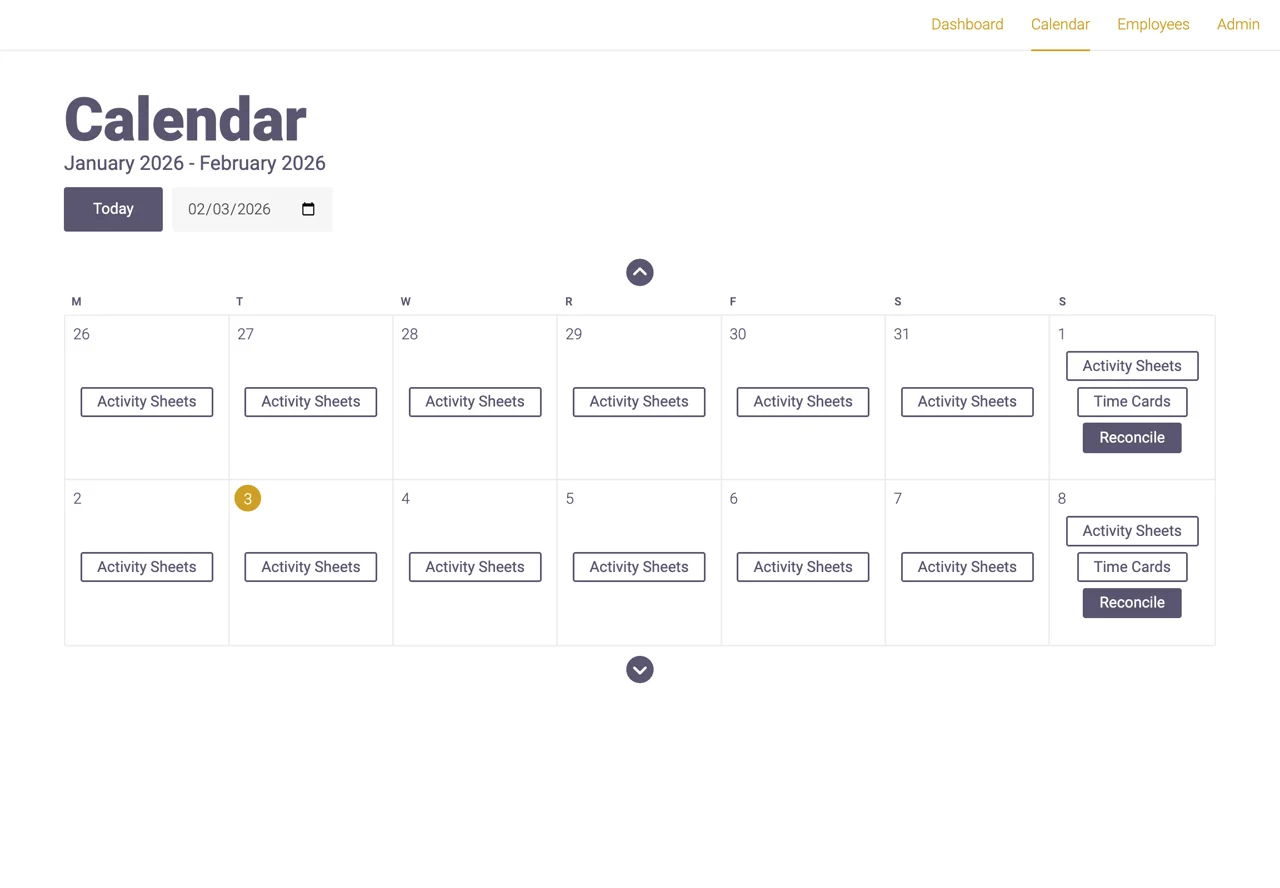
- Interactive calendar providing a bird's-eye view of the entire workforce, making reconciliation and exceptions instantly visible
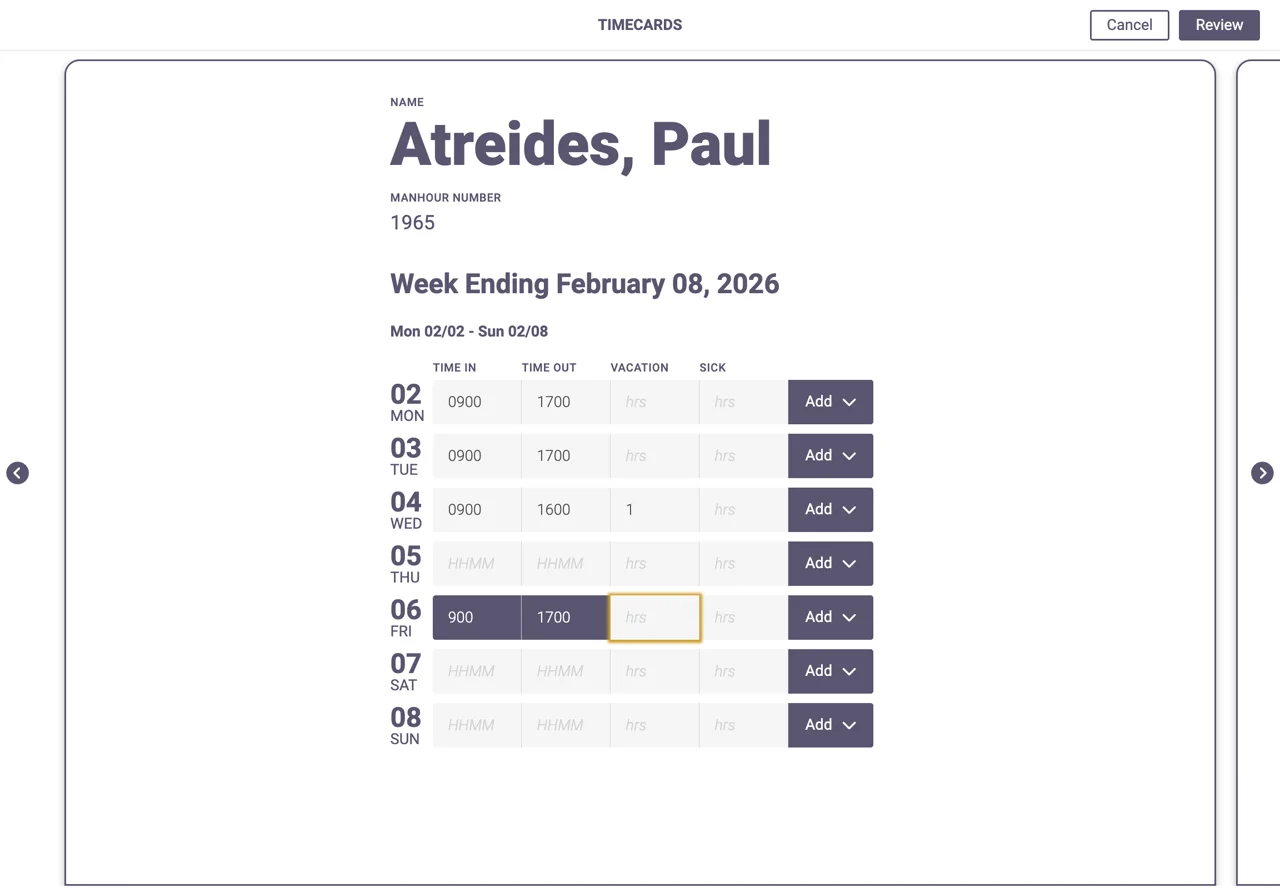
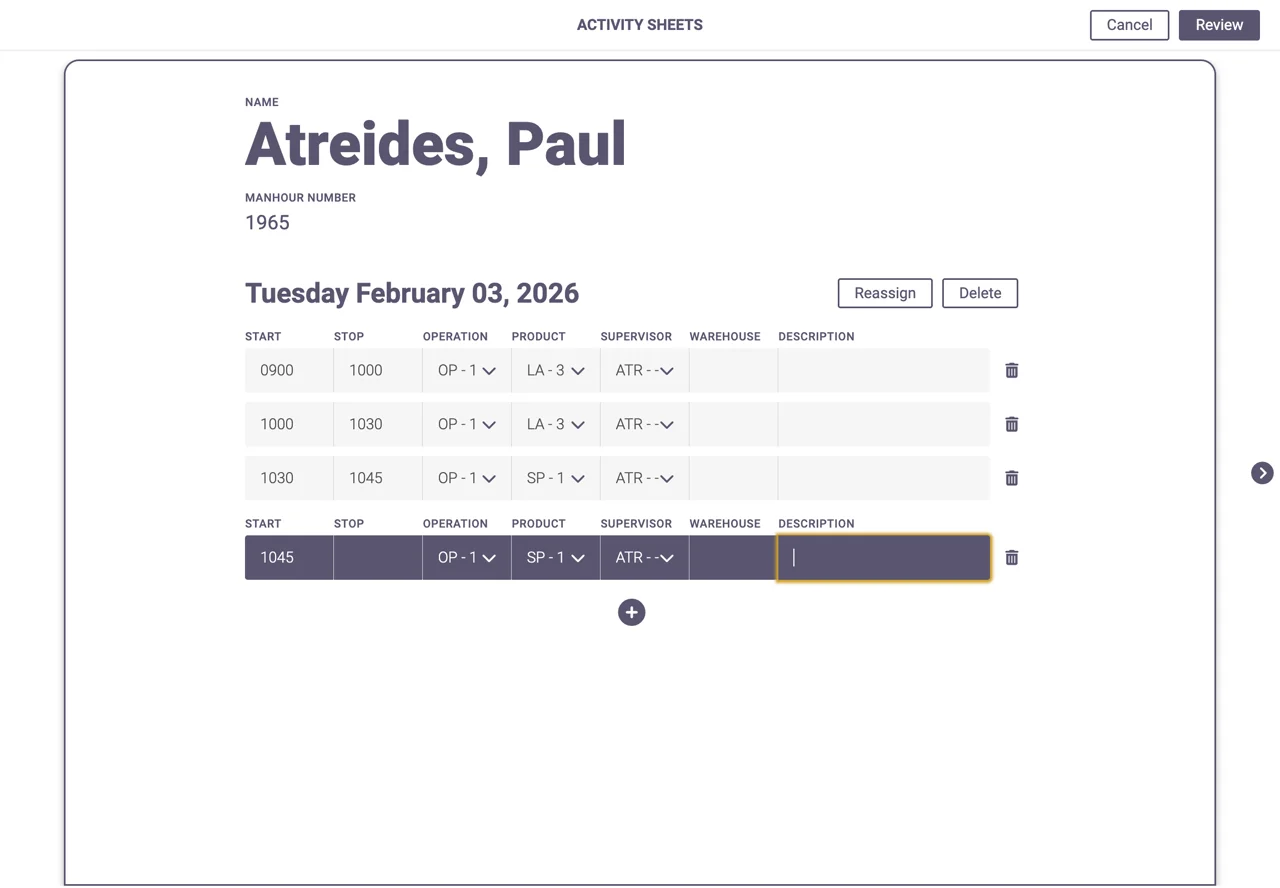
- Responsive forms for timecards and activity sheets that handled complex rules: overtime, overnight shifts, DST transitions, and varied employment types
Full Story
A warehouse and logistics company based in Louisiana had relied for decades on an aging system to manage time and work records for hundreds of employees across various employment types. The business admins were bogged down by slow data entry, limited visibility, and constant manual reconciliation.
We built a modern replacement from the ground up. The platform streamlined the full admin workflow: logging hours and adjustments on timecards, recording activity sheets, managing time-off requests, and calculating payroll under complicated rules (overtime thresholds, overnight shift boundaries, DST changes, and more).
To make the daily work feel fast and natural, we leaned heavily into ergonomics. Keyboard shortcuts and hotkeys were added throughout so admins could navigate, edit, and submit entries without ever reaching for the mouse. We also built an interactive calendar that gave a high-level overview of the whole team, highlighting what needed attention each day and letting admins jump straight into the relevant timecard or activity sheet. The result was exactly what they needed. Data entry sped up noticeably, mistakes became easier to catch early, and the admins finally had software that supported their workload.
I was one of the core developers on the initial buildout, working closely with a UX designer and two other engineers. I implemented many of the UI components from the designer's mockups as well as many of the keyboard navigation features. The app stayed responsive and smooth even as employee counts and historical data grew.
This project shows what happens when you build software specifically for the people who will use it every day. We took a process that had become painful over decades and turned it into fast, responsive workflows that actually made their work easier.